
Connection With Zero Dialogue
Reading The Correspondent by Virginia Evans

Welcome, readers! As a reminder, this is Reading Like a Writer, where I examine the craft of writing through the lens of (mostly) literary fiction that I’m reading.
Today, I am writing you near the wildfire-smoke laden Leonidio, a town in the eastern Peloponnese. It’s a good day to stay in and work on a Substack post. The area is popular with rock climbers, and because of that, I am able to find tofu, soy milk, and plant-based nuggets and burgers in the local supermarkets. Thanks, climbers!
Speaking of Sisyphus and boulder-climbing, I was astonished to learn The Correspondent was author Virginia Evans’ eighth novel. The other seven remain unpublished.
For this book, she exhausted all the agents of New York City per her interview on the New York Times Book Review podcast. She finally found an agent in Toronto.
How did Evans keep going, novel after novel? My morale would have been attending self-help sessions, then quitting, then developing additional cupcake addictions.
In the podcast interview, Evans said she wrote the novel she wanted to read during Covid lockdowns. She had just finished reading an epistolary memoir, 84 Charing Cross Road by Helene Hanff, and was inspired by how much she enjoyed it and wanted the book to continue. Evans was further inspired by John Williams’ Stoner (which I’ve added to my to-read spreadsheet, which is getting longer than my potential life).
No doubt her writing habits also helped with perspective. She was thirty-nine at the time of the interview, and had been writing since age nineteen from 5:00 - 7:00 am every (!) morning. Twenty years of dedicated hours and practice certainly would help a writer view the act of writing as natural as eating a meal, perhaps contextualizing the sting of seven unpublished books. Writing is just something one does, like breathing, hoping to get as far as one can.
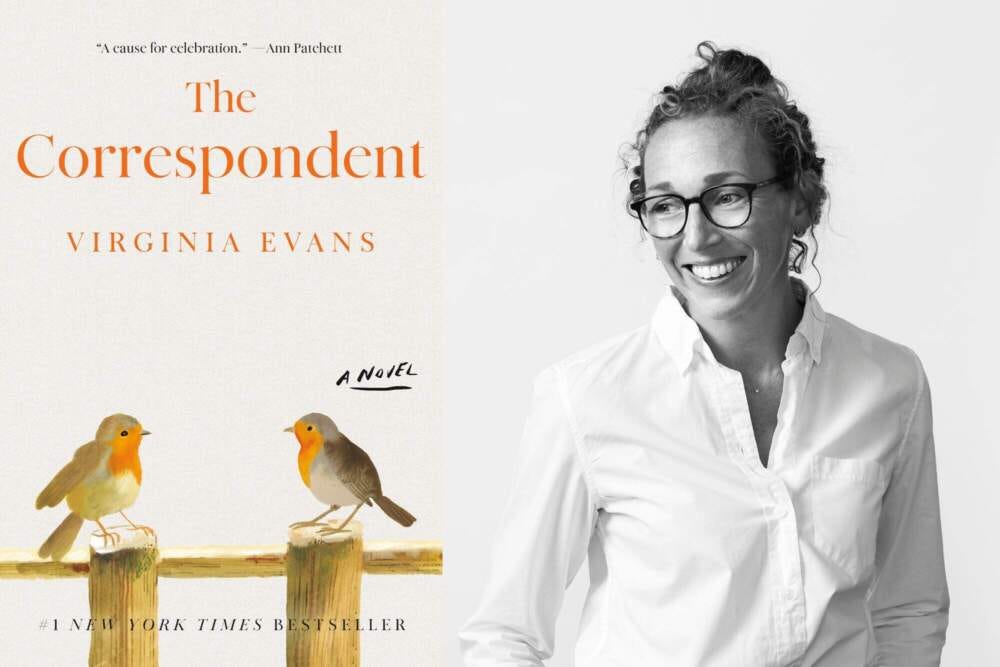
A brief synopsis from the author’s website:
A woman tries to heal old wounds and make sense of the world the only way she knows how—through letters—in this charming, laugh out loud debut novel about a life fully lived.
Indeed “fully lived” is an apt descriptor. The book traverses the spectrum of human experience exploring forgiveness, redemption, grief, disappointment, outrage, joy—it’s all here in the protagonist Sybil’s transformation.
As you might know, Evans’ book was a word-of-mouth hit. In fact, by the time I reserved it at my local library following my good friend Lynn’s recommendation (of PostScripts Editing) I had to wait over six months to receive it. And those agents who previously rejected her book? A few wrote her as “the one who got away.” The Book Review podcast host replied “That’s because they are trying to get you back.”
No dialogue, still propulsive
Once, someone from my past critique group told me I needed more dialogue in my novel. To break up the text. I was not wholly on board with this feedback; after all, most literary fiction I’ve read does not have not wall-to-wall dialogue. It’s character development, musings. Many, many musings. But as Devon Halliday deftly points out here, fellow critiquers may be good at pointing out a problem, but incorrect about the solution.
Undoubtedly the issue with my book was not the absence of dialogue but the absence of interest. Unlike my earlier draft (let’s hope the final draft will be different) Evans’ book proves that traditional dialogue is not necessary to create an engaging read. The Correspondent, instead, has what I will term as slow dialogue. There is still a repartee, a back-and-forth; it just takes longer to get the response. Call and … … …. response.
Even without characters exchanging sentences in real time, the reader could feel the emotional weight behind the characters and their fraught relationships.
When I read this line Sybil wrote to her estranged daughter, I felt it so deeply:
“I know you think of me as your mother only, but please remember, inside I am also just a girl.” —Sybil, to her daughter, Fiona
Such a simple way to disrupt the inviolable parental role. The mother was only a child, too, in many ways, as the letters show.
The epistolary format from a craft perspective
Fellow Gen Xers might relate to memories of sending and receiving letters, the joy of opening your mailbox to find your friend/cousin/pen-pal has sent you back a missive (or the crushing disappointment of finding nothing). As a kid making several trips to Greece, letters from home sustained me (and vice-versa, receiving letters from my Greek family back in Seattle). Letters helped me understand my young parents, when first in love. Similarly, when reading some of my family’s old letters, I was struck by just how candid they were. How much they shared with one another. How vulnerable.
Missing the nature of letter writing, I decided to start a personal letter-writing “campaign” about 15 years ago. I eagerly chose a few friends and family and wrote them what could someday become classics. 🤓
I wrote, I posted, I waited. And waited.
(I’m still waiting.)
Apparently I lack the gift and grit of Evans, as my campaign ceased when my letters produced nothing in return.
So reading a book full of letters was doubly enjoyable, since I could live vicariously through Sybil. There were several elements unique to the epistolary novel format. These one-way communications were anything but; I felt the entire range of communications. As they say: I laughed, I cried.
The bite-sized “chapters” made it feel like it flew by; most letters were quite short. Some were (reluctantly) emails.
The delay in response felt like a very slow conversation, which created suspense. This was particularly so when the next letter was not the person involved in the previous letter and so-on. How will X person respond to X accusation?
The letter’s date became significant, and I often found myself flipping back to note it. How long had the writer taken to write back? A year? Especially when the topic was urgent, a delayed letter could indicate reluctance of the character to address an emotional topic. And so character is revealed by something as simple as a date.
Starting each letter, one sometimes has no idea who is writing, and I challenged myself not to peek. Evans masterfully carved out her characters and the various storylines, so in many cases it was clear who was writing without paging to the end.
“Now, of course, I always welcome your thoughts on every matter, but in this case, I beg you to tread thoughtfully because I fear I’m so perplexed by the matter that anything you say might make tracks I’d be unable to erase.” —Sybil, written to brother Felix
The uneraseable tracks! How true, and a great way to show Sybil’s vulnerability beneath her tough presentation.
In the end, I cried. I felt like I was receiving the letter myself.
Speaking of.
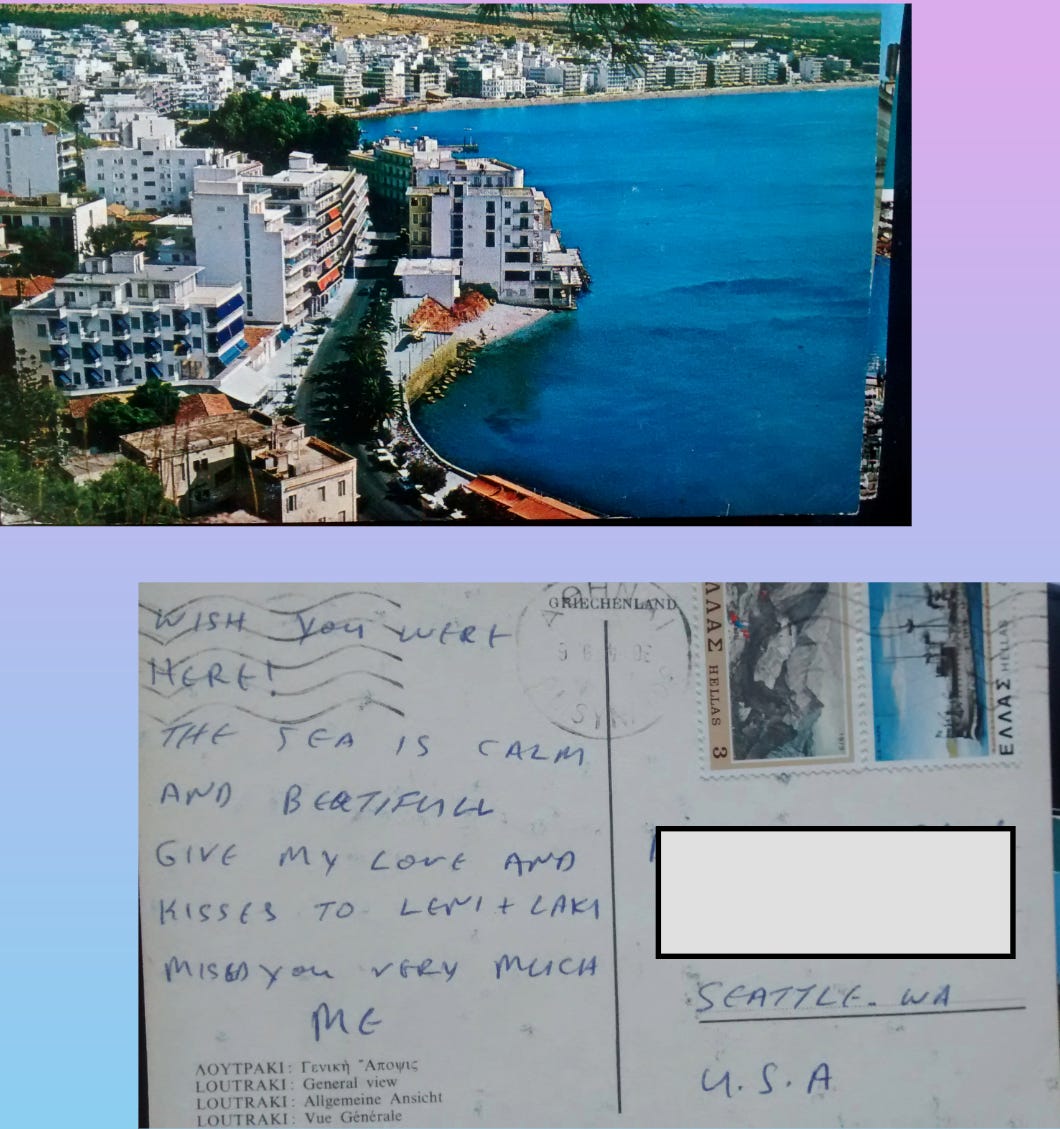
I used to write letters, way back in the day. Can I count blog posts as letters to multiple friends at once?
Anne still exchanges at least one mailed letter a week with her oldest friend (from the 80s)
Thanks to Lynn Post (appropriate name for sharing story told via letters!) I also read the Correspondent and also loved it. So fun to read your take, Eleni, and learn a bit about the author. Seven previous novels - all unpublished!? Also loved learning that she wrote the novel she'd want to read. Another favorite epistolary novel is Where'd You Go Bernadette. :-)